


2026 Honda CR-V vs. 2026 Toyota RAV4
Two of the most recognized compact SUVs take different approaches for 2026. The CR-V gives Gresham drivers a choice between turbocharged gas and hybrid power, while the redesigned RAV4 moves to an entirely electrified lineup.
More choice or more standard hybrid power?
The 2026 Toyota RAV4 arrives as an all-new, hybrid-only model with strong efficiency, higher available system output and expanded technology. The 2026 Honda CR-V takes a broader approach: shoppers can select an efficient 190-horsepower turbocharged engine or move into a smooth 204-horsepower two-motor hybrid.
That distinction matters. The CR-V can be the more accessible entry point for drivers who do not need a hybrid, while its hybrid trims retain the calm road manners, generous rear-seat space and intuitive cabin layout that make the CR-V easy to live with every day.
2026 CR-V and RAV4 comparison
The table below compares the full model lineups. Because both SUVs offer multiple drivetrains and trims, specifications can vary by configuration.
| Category | 2026 Honda CR-V | 2026 Toyota RAV4 |
|---|---|---|
| Starting MSRP | $30,920 | $31,900 |
| Powertrain lineup | 1.5L turbo gas or two-motor hybrid | Hybrid or plug-in hybrid only |
| System output | 190 hp gas; 204 hp hybrid | 226 hp FWD hybrid; 236 hp AWD hybrid; 324 hp plug-in hybrid |
| Fuel economy | Up to 30 MPG combined gas; up to 40 MPG combined hybrid | Up to an estimated 47 city / 40 highway MPG on select hybrid trims |
| Rear legroom | 41.0 in. | 37.8 in. |
| Cargo volume behind rear seats | 39.3 cu. ft. gas; 36.3 cu. ft. hybrid | Up to 37.8 cu. ft. |
| Standard center display | 9-in. color touchscreen | 10.5-in. Toyota Audio Multimedia touchscreen |
| All-wheel drive | Available Real Time AWD™ | Available Electronic On-Demand AWD |
| Maximum towing capacity | 1,500 lbs. gas; 1,000 lbs. hybrid | Up to 3,500 lbs. on properly equipped AWD trims |
| Standard driver assistance | Honda Sensing® | Toyota Safety Sense™ 4.0 |
MSRP, EPA estimates, towing ratings and features are manufacturer figures available at the time of publication. Ratings and equipment vary by trim, drivetrain and configuration. Always confirm current vehicle specifications before purchase.
The CR-V gives buyers a decision the RAV4 no longer does
Every 2026 RAV4 is electrified. Its standard hybrid system produces 226 horsepower with front-wheel drive or 236 horsepower with all-wheel drive, and Toyota also offers a more powerful plug-in hybrid.
The CR-V is less prescriptive. LX, EX and EX-L trims use a responsive 190-horsepower turbocharged engine, while Sport Hybrid, TrailSport Hybrid, Sport-L Hybrid and Sport Touring Hybrid trims use Honda’s 204-horsepower two-motor hybrid system.
- CR-V advantage: a lower-cost gas entry point and a wider range of powertrain choices.
- RAV4 advantage: hybrid power is standard, with higher available output and stronger peak efficiency.
- Shared strength: both offer available all-wheel drive for wet roads and changing Northwest conditions.
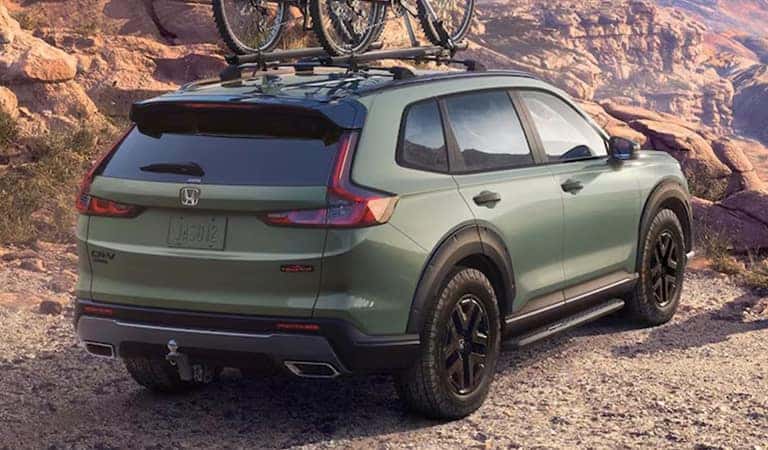
CR-V rear-seat space is a meaningful advantage
The CR-V provides 41.0 inches of rear legroom compared with 37.8 inches in the RAV4. That 3.2-inch difference can be noticeable when adults regularly ride in back or when parents need room to work around rear-facing child seats.
Cargo capacity depends on powertrain. Gas CR-V models offer up to 39.3 cubic feet behind the second row, while CR-V Hybrid models provide 36.3 cubic feet. The RAV4 offers up to 37.8 cubic feet, placing it between the two CR-V configurations.
The choice is therefore less about a single cargo number and more about how the vehicle will be used. The gas CR-V provides the largest cargo figure of the three, while the CR-V Hybrid exchanges some storage volume for its hybrid hardware and stronger city efficiency.
Different interpretations of a modern compact SUV
Standard connectivity
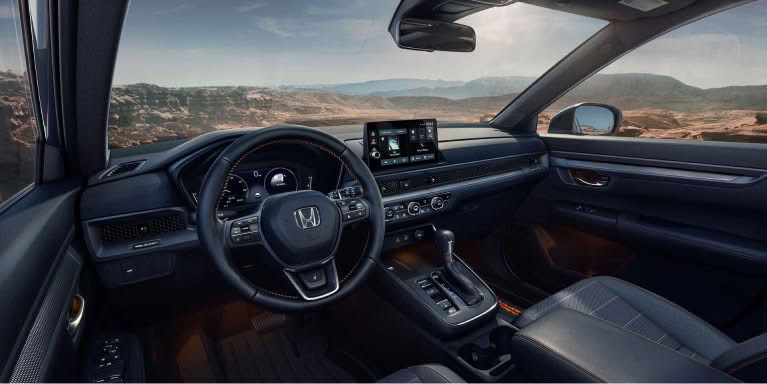
The 2026 CR-V now includes a 9-inch touchscreen, wireless Apple CarPlay® and Android Auto™ compatibility, and a wireless phone charger across the lineup. The RAV4 counters with a larger 10.5-inch standard display and Toyota’s newest multimedia interface.
Available premium technology
Upper CR-V trims add features such as a 10.2-inch digital instrument cluster, a Bose® premium audio system and Google built-in on the Sport Touring Hybrid. Upper RAV4 trims can add a 12.9-inch touchscreen, available JBL® audio and an expanded suite of parking and driver-assistance technology.
Driver-assistance systems
Honda Sensing® is standard on every CR-V and includes core collision-mitigation, lane-support and adaptive-cruise functions. Every RAV4 includes Toyota Safety Sense™ 4.0, Toyota’s latest generation of active safety technology. The better interface will ultimately depend on which controls and alerts feel more natural during a test drive.
Which SUV better fits Northwest driving?
Both models are well suited to daily commuting, wet pavement and weekend travel. The deciding factor is how you balance comfort, efficiency, capability and price.
You prioritize comfort and flexibility
Its expansive rear-seat area is useful for families and adult passengers, while the gas-and-hybrid lineup lets you choose how much you want to invest in efficiency. The CR-V’s clean control layout also favors drivers who want technology that feels familiar rather than complicated.
You want hybrid power from the start
The RAV4 delivers more standard system horsepower, higher peak fuel-economy ratings and up to 3,500 pounds of towing capacity on certain AWD trims. It is the stronger fit for buyers who have already decided that every powertrain on their shopping list should be electrified.
Why consider the 2026 Honda CR-V?
The redesigned RAV4 is a formidable competitor, particularly for shoppers focused on hybrid performance, infotainment screen size and towing capacity. The CR-V’s case is different: it offers a more flexible lineup, lower starting price, noticeably greater rear legroom and a cabin designed around everyday ease of use.
For many Gresham-area drivers, that combination makes the CR-V the more balanced choice. It can be an efficient and attainable gas-powered compact SUV, a refined hybrid commuter or an AWD-equipped vehicle ready for changing Oregon weather—all without changing the core qualities that make the CR-V comfortable and practical.
2026 Honda CR-V vs. Toyota RAV4 FAQs
Is the 2026 Toyota RAV4 available with a gas-only engine?
No. For 2026, Toyota moved the RAV4 to an entirely electrified lineup consisting of hybrid and plug-in hybrid models. The 2026 Honda CR-V remains available with either a turbocharged gas engine or a two-motor hybrid system.
Which has more rear legroom, the CR-V or RAV4?
The 2026 Honda CR-V has 41.0 inches of rear legroom, compared with 37.8 inches in the 2026 Toyota RAV4. The CR-V provides 3.2 additional inches.
Which is more fuel-efficient?
The highest-rated RAV4 hybrid configurations have the advantage in peak fuel economy. The CR-V Hybrid is still highly efficient, earning up to an EPA-estimated 43 MPG city, 36 MPG highway and 40 MPG combined with front-wheel drive.
Which can tow more?
Properly equipped 2026 RAV4 AWD trims can tow up to 3,500 pounds. Gas-powered CR-V trims are rated up to 1,500 pounds, while CR-V Hybrid trims are rated up to 1,000 pounds.
Can I get a 2026 Honda CR-V with all-wheel drive?
Yes. Honda’s Real Time AWD™ system is available throughout much of the CR-V lineup, and AWD is standard on the TrailSport Hybrid and Sport Touring Hybrid.
Test-drive the 2026 Honda CR-V in Gresham
Compare gas, hybrid and AWD CR-V configurations at Tonkin Gresham Honda on SE Stark Street. Our team can help you identify the trim and powertrain that fit your commute, passenger needs and weekend plans.